About
Dr. Boris S. Dobroborsky is an applied researcher and inventor with extensive experience in mechanical engineering, pneumatic systems, and occupational safety. His work bridges fundamental physics with real-world engineering challenges — from reducing vibration-induced injuries in industrial workers to designing ergonomic workplaces for people with disabilities.
His inventions include a family of vibration-safe pneumatic impact machines, ergonomic workstation concepts for computer users and air traffic controllers, and adapted computer environments for users with mobility impairments. Throughout his career, Boris has combined rigorous scientific methodology with a deep commitment to human safety and wellbeing.
Life Safety Research Center
Pneumatic Impact Machines
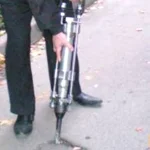
Vibration Safe Pneumatic Breaker PB3-D1
Development of a portable pneumatic breaker incorporating anti-vibration mechanisms to minimize hand-arm vibration transmitted to the operator. Designed to comply with occupational safety standards while maintaining high impact efficiency.
Vibration Safe Pneumatic Breaker PB3-D2
Second-generation vibration-safe pneumatic breaker with improved damping geometry and refined ergonomic grip design. Addresses limitations of the PB3-D1 with enhanced energy absorption at multiple frequency bands.
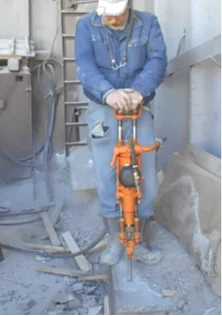
Vibration Safe Pneumatic Rock Drill
A pneumatic rock drilling device engineered with integrated vibration-isolation features for use in mining and construction environments. Focus on operator protection under sustained high-impact conditions.
Pneumatic Perforator for Drilling Horizontal Holes
Specialized pneumatic perforator designed for horizontal drilling applications in civil engineering and underground installations, optimizing thrust-to-vibration ratio for precision work.
Ergonomic Developments
Ergonomic Computer Workspace
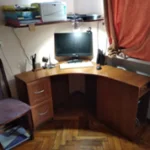
A systematic ergonomic approach to computer workstation design, addressing postural strain, visual fatigue, and repetitive motion injuries common in prolonged computer use. Based on biomechanical analysis and user studies.
Computer Table for Users with Lower-Extremity Mobility Impairments
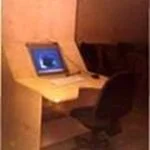
Adaptive computer workstation designed for users experiencing swelling or reduced mobility in the lower extremities. Incorporates adjustable height, accessible reach zones, and support structures to enable comfortable and productive computer use.
Ergonomic Air Traffic Controller Workplace
Analysis and redesign of the air traffic controller workstation with attention to sustained vigilance demands, display placement, and seated posture over extended operational shifts. Addresses both physical and cognitive ergonomic factors.
Improved Method of Visual Measurements
Development of a refined methodology for visual measurement tasks, improving accuracy and reducing operator eye strain in precision inspection and quality-control environments.
Educational Center
Teaching and Learning in the AI Era
Developing modern pedagogical approaches that integrate artificial intelligence into educational practice.
Change Management and Organizational Innovation
Research and consulting on leading organizational transformation and institutional change.
Educational Leadership in the 21st Century
Frameworks for effective leadership in contemporary educational environments.
Developing Training Programs for Organizations
Design and delivery of customized learning programs for corporate and institutional clients.
Entrepreneurship, Creativity and Future Skills
Cultivating entrepreneurial thinking and preparing learners for the demands of a rapidly evolving economy.
Consulting
Expert advisory services across life safety, human factors, and organizational development.